

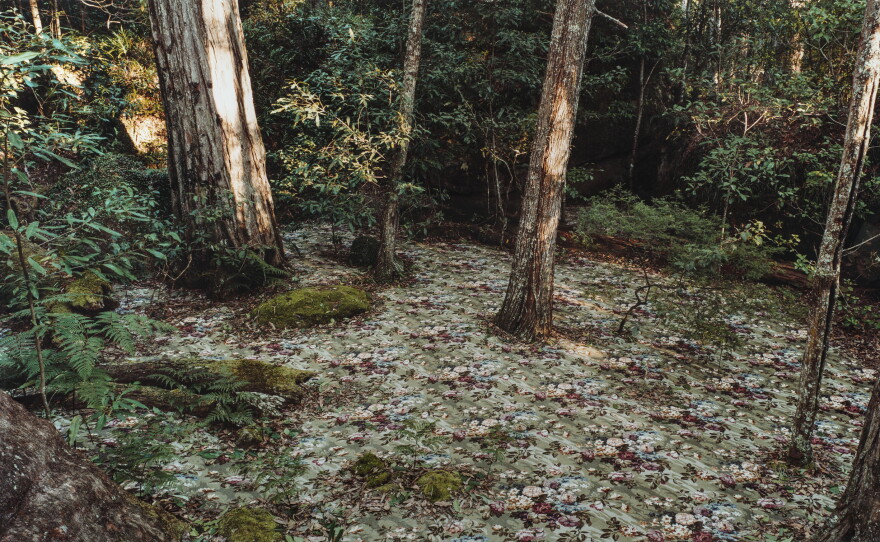
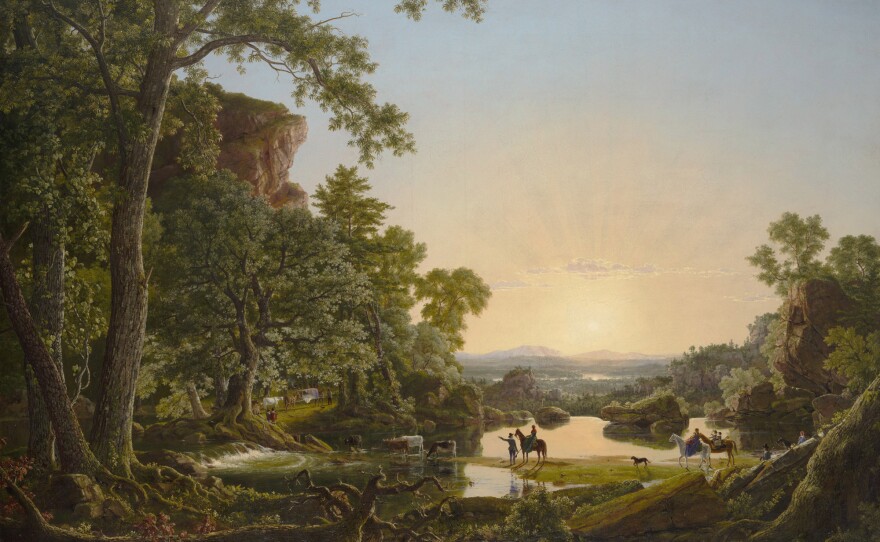

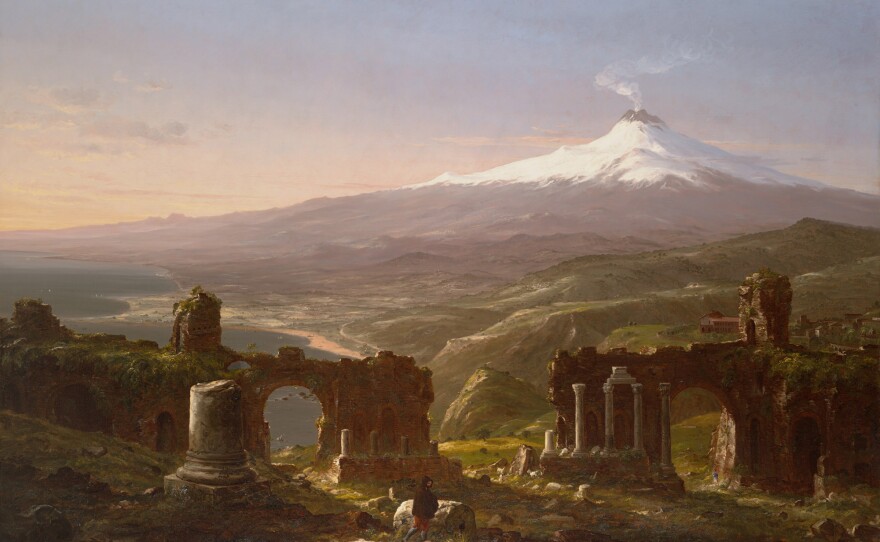
It might seem odd for a museum boasting one of the nation's largest collections of the Hudson River School, a 19th-century art movement celebrating the beauty of America's outdoors, to document parking lots and discarded rubber tires.
But while viewing An Artificial Wilderness: The Landscape in Contemporary Photography, the Wadsworth Atheneum's first photo exhibition in nearly ten years, one can't help but wonder at how Hartford's own Frederic Edwin Church would respond to the scale at which humans are creating (and throwing away) more and more stuff.
Patricia Hickson, curator of An Artificial Wilderness, said the display "seemed the antithesis" of the Hudson River School. The title for the exhibit comes from the W.H. Auden poem, "The Shield of Achilles," which Hickson said refers to "modern society's passive stance toward the decline of human values and its disregard for the physical world."
Perhaps nowhere is that on better display than in the Wadsworth's photographs of Ana Mendieta, a Cuban-born artist famous for her "earth-body" work. Midway through the exhibition hall you stumble upon one picture of Mendieta where the artist is quite literally folded into the landscape. She's nude, covered in mud, and standing with her arms outstretched and her back to a tree. Her eyes are closed, but in my mind's eye you can almost see them flickering open, as if the forest is slowly breathing life into a new and savage creation.

From there, I walk a few steps down the exhibit hall and stumble upon the same landscape, but this time Mendieta is gone, leaving a ghostly indentation of her body in the mud. You walk away from Mendieta's photographs feeling as though you witnessed the birth of a creature both horrific and beautiful. The muddy forest gave birth to us, but will we remember to return and be its steward?
Of equal interest are the works of German artist Frank Breuer, whose factory photographs document cookie-cutter industrial structures lacking windows and doors. Breur captures buildings in a way that makes them look like alien artifacts inserted into pastoral Midwestern landscapes. (Think Google barge on land.)
It's also hard to ignore the exhibition's contrast between Danish artist Olafur Eliasson's two subtly-composed landscapes of Iceland and Church's colorful visions of Hudson Valley arcadia. By framing the stark emptiness of icy mountains, Eliasson lays bare the traditional landscape, presenting us with a simple question: what will be left behind when all of us are gone?
If you plan to attend:
An Artificial Wilderness: The Landscape in Contemporary Photography has been extended to run through February 23. For more information: (860) 278-2670 or thewadsworth.org.

