

Connecticut Public is proud to support PBS’s climate programming initiative, a bold commitment to explore environmental impacts on our planet through solutions-driven storytelling.
-
 Attendees of Congresswoman Rosa DeLauro’s town hall shared their fears about a worsening financial situation amid the war in Iran.
 -
 Connecticut residents are feeling pain at the pump as oil prices once again take center stage in national politics. What policy decisions put the U.S. back in this place?
 -
 Rust is all around us. It’s in our cars, our homes, our infrastructure … our art, even. This hour, a long look at rust and corrosion.
 -
 Connecticut lawmakers have until April 1 to advance a bill that would increase registration fees for electric vehicles and plug-in hybrids.
 -
 Beavers are known as a "keystone species," contributing to biodiversity wherever they set up their habitats. Today, Connecticut author and journalist Leila Philip joins us to talk about her book "Beaverland: How One Weird Rodent Made America."
 -
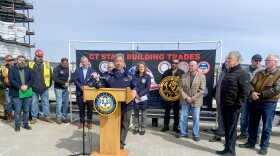 The wind project, located off the coast of Connecticut and Rhode Island, will eventually generate enough electricity to power 350,000 homes.
 -
In 1975, Mystic Aquarium launched its Animal Rescue Program, where experts work to rehabilitate marine animals. The aquarium even operates a 24-hour hotline, where people can send in reports of marine life in need.
-
 A bill that would have legalized wake surfing – a fast growing, but sometimes controversial watersport – on most Connecticut lakes, will not be moving forward.
 -
 How do we begin to understand the full economic, human, and environmental impacts of war? This hour we talk with someone who is doing that math.
 -
 Amid rising oil and gas prices, Connecticut officials are canvassing the state, asking communities if they’re interested in hosting a controversial form of power: nuclear energy.
 -
 In their perennial battle to solve the state’s mounting trash problems, Connecticut lawmakers are again considering a ban on polystyrene takeout containers and other limits on single-use plastics.
 -
 The project, off the coast of Connecticut and Rhode Island, will ultimately generate up to 704 megawatts of electricity — the equivalent of powering 350,000 homes.


