© 2026 Connecticut Public

FCC Public Inspection Files:
WEDH · WEDN · WEDW · WEDY
WEDW-FM · WNPR · WPKT · WRLI-FM
Public Files Contact · ATSC 3.0 FAQ
Play Live Radio
Next Up:
0:00
0:00
0:00 0:00
Available On Air Stations

Carney told Trump that Canada is not for sale. 'Never say never,' Trump replied

President Trump meets with Canadian Prime Minister Mark Carney in the Oval Office on May 6.
Jim Watson
/
AFP
President Trump meets with Canadian Prime Minister Mark Carney in the Oval Office on May 6.

Updated June 9, 2025 at 11:21 AM EDT

President Trump insisted that he would keep tariffs on Canadian goods during a friendly first meeting with Canadian Prime Minister Mark Carney at the White House on Tuesday, but he did not press his case that Canada should become the 51st state.

Trump told reporters he would like to see Canada become part of the United States but nodded to the opposition to the idea from Canadians. "Takes two to tango, right?" Trump said.

Carney, who won Canada's election last week by pushing back against Trump's aggression, told Trump that annexation was out of the question.

"As you know from real estate, there are some places that are never for sale. We're sitting in one right now," Carney told Trump. "Having met with the owners of Canada over the course of the campaign, last several months, it's not for sale. Won't be for sale, ever," he said.

Trump responded: "Never say never."

Canada is reeling from Trump's tariffs

Trump's rhetoric and trade policies have sparked tension between the two allies and a wave of nationalism in Canada.

Trump imposed a 25% tariff on many Canadian goods in March, including steel. On Tuesday, he said he was not inclined to lower tariffs on Canada, saying the tariffs would revitalize American manufacturing.

"We want to make our own cars," Trump said. "We don't really want cars from Canada, and we put tariffs on cars from Canada, and at a certain point it won't make economic sense for Canada to build those cars. And we don't want steel from Canada because we're making our own steel."

The tariffs come ahead of a review of the United States-Mexico-Canada Agreement (USMCA) trade deal slated for next year. Carney said changes are needed in that agreement. "Part of the way you conducted these tariffs has taken advantage of existing aspects of USMCA, so it's going to have to change," Carney said.

Canadian Prime Minister Mark Carney holds an election rally in Windsor, Ontario, on April 26.
Dominic Gwinn / AFP
/
AFP
Canadian Prime Minister Mark Carney holds an election rally in Windsor, Ontario, on April 26.

It's the chance for a reset in the relationship

Carney is a former central banker who took over after Prime Minister Justin Trudeau resigned as leader of the center-left Liberal Party in January. The party was down in the polls until Trump started talking about annexation, raising the ire of Canadians.

Trump complimented Carney on his election win, wryly noting, "I think I was probably the greatest thing that happened to him."

Carney's willingness to stand up to Trump's rhetoric was a big part of his appeal to voters, said Asa McKercher, a public policy professor at St. Francis Xavier University in Nova Scotia, describing the "elbows up" slogan adopted by Carney's campaign. It's a hockey term used to describe a defensive stance.

Tuesday's meeting could be an opportunity to "reset the relationship" between the U.S. and Canada, "because it's pretty bad," McKercher said ahead of the meeting. "Canadians are really upset at the president of the United States."

Copyright 2025 NPR
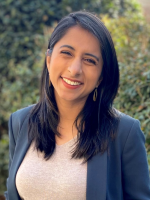
Lexie Schapitl is a producer with NPR's Washington Desk, where she does a little bit of everything. She can be found reporting from Capitol Hill, producing the NPR Politics Podcast or writing the weekly NPR Politics newsletter.
Deepa Shivaram
Deepa Shivaram is a White House Correspondent at NPR.

Federal funding is gone.

Congress has eliminated all funding for public media.

That means $2.1 million per year that Connecticut Public relied on to deliver you news, information, and entertainment programs you enjoyed is gone.

The future of public media is in your hands.

All donations are appreciated, but we ask in this moment you consider starting a monthly gift as a Sustainer to help replace what’s been lost.

SOMOS CONNECTICUT is an initiative from Connecticut Public, the state’s local NPR and PBS station, to elevate Latino stories and expand programming that uplifts and informs our Latino communities. Visit CTPublic.org/latino for more stories and resources. For updates, sign up for the SOMOS CONNECTICUT newsletter at ctpublic.org/newsletters.

SOMOS CONNECTICUT es una iniciativa de Connecticut Public, la emisora local de NPR y PBS del estado, que busca elevar nuestras historias latinas y expandir programación que alza y informa nuestras comunidades latinas locales. Visita CTPublic.org/latino para más reportajes y recursos. Para noticias, suscríbase a nuestro boletín informativo en ctpublic.org/newsletters.

Federal funding is gone.

Congress has eliminated all funding for public media.

That means $2.1 million per year that Connecticut Public relied on to deliver you news, information, and entertainment programs you enjoyed is gone.

The future of public media is in your hands.

All donations are appreciated, but we ask in this moment you consider starting a monthly gift as a Sustainer to help replace what’s been lost.

Related Content
  • Saudi Arabia on Saturday said that Yemen's Houthi rebels tried to attack Riyadh with a ballistic missile, the first time the Saudi capital has been targeted since the escalation in fighting with the Iran-backed rebels opened a new front in the Iran war.
  • Ed Sheeran opened a solo concert Saturday with comments about Gaza after controversy swirled around his tour and supporting acts withdrew in solidarity with opener Macklemore, who was dropped after making pro-Palestinian comments onstage.
  • The U.N. expanded the United Nations Interim Force in Lebanon's mandate 20 years ago to include monitoring adherence to a ceasefire in fighting between Israel and Lebanon's Iran-backed Hezbollah — the militant group created in 1982 to counter a second Israeli invasion.
