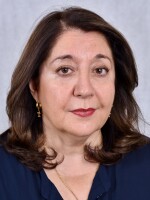
LEILA FADEL, HOST:
Today, Syrians are marking the first anniversary of the fall of dictator Bashar al-Assad's regime. The opposition's leader, a former Al-Qaeda fighter, is now Syria's president. He's been welcomed to the White House and embraced by many - although not all - Syrians. Correspondent Jane Arraf is at the celebrations in Damascus and is on the line with me now. Hi, Jane.
JANE ARRAF, BYLINE: Hi, Leila.
FADEL: So where in the city are you? What are you seeing?
ARRAF: I'm in Umayyad Square, which, as you know, is one of the big landmarks of the city.
FADEL: Yeah.
ARRAF: And you remember when we were in Damascus shortly after the fall of the regime, it was wild, right?
FADEL: Yes.
ARRAF: There were people in the square all the time, waving flags, singing.
FADEL: Yeah.
ARRAF: It's kind of like that now, only about 10 times more. Thousands of people here. I mean, this is a brief lull in the celebrations, which really have been going on for the past few days - fireworks, people driving around, honking their horns. It's been a holiday. But you can see the city now is a bit different - cleaner, more organized, and people are just - people here, anyway, are just full of joy. They're celebrating things that you can't feel, but they certainly do. It's that freedom from fear.
FADEL: Yeah. And a year on, what else is happening to commemorate this day?
ARRAF: Well, as you know, after decades of the Assad leadership, and then the civil war that lasted from 2011 to just last year...
FADEL: Yeah.
ARRAF: ...A lot of this joy is mixed with sorrow.
FADEL: Of course.
ARRAF: Earlier this morning, we were at a mosque, one of the main mosques in the neighborhood where the rebellion was particularly strong, and hundreds of people were killed in the government crackdown. Their photos are now lining the walls of that mosque, and it went on for blocks. People in that mosque and across the country testified their faith, their Muslim faith, this morning at the exact time that Damascus was liberated.
UNIDENTIFIED GROUP: (Chanting in non-English language).
ARRAF: Those dawn prayers also gave thanks for the revolution. I spoke to one woman there. Some of them were going around pointing out photos of their missing or dead loved ones. And one woman told me she considered all of them her family. And that's because they're still finding mass graves here, that level of sorrow. Many people don't know what's happened to their loved ones.
FADEL: Yeah. What about what the president of Syria, this new president, Ahmed al-Sharaa, which many Syrians believe in, but there are many Syrians who are skeptical of, what is he telling people on this day?
ARRAF: Well, he seems to be trying very hard to make this work. To tamp down the violence, to increase confidence among Syrians. We spoke with Syrian American activist Moaz Mustafa. We've covered him since the start and before. He's from the Syria Emergency Task Force. He met with al-Sharaa last night, and he says the challenge is to build institutions.
MOAZ MUSTAFA: There should never be a country that is really all based on just one person's presence. And I think one of his challenges is to build the institutions and to build a political process that is representative that allows Syria to survive if he, God forbid, dies any day.
ARRAF: So really, it seems to be a balance between that cult of celebrity and people and countries who think that al-Sharaa has not moved beyond his militant roots.
FADEL: That's Jane Arraf in Damascus. Thank you.
ARRAF: Thank you.
(SOUNDBITE OF MUSIC) Transcript provided by NPR, Copyright NPR.
NPR transcripts are created on a rush deadline by an NPR contractor. This text may not be in its final form and may be updated or revised in the future. Accuracy and availability may vary. The authoritative record of NPR’s programming is the audio record.