

In 2018, Sonia Hernandez was enrolling her children into school in Bridgeport, having just moved from New York. The experience was different from what she was used to.
“In New York, the schools would organize a parent’s welcome,” Hernandez said. “They’d give you a tour of the school and show you who the teachers are and what their programs were. When we moved to Bridgeport, they didn’t even let us see the school.”
Hernandez said she was only able to go to the school’s office to register her children. If she wanted to speak to her children’s teachers or principal, she said she had to schedule a meeting. She also said the school didn’t have an adequate interpreter for Spanish speakers like herself.
“I felt weird and frustrated,” Hernandez said. “They told me, ‘We’re going to bring the secretary to translate.’ But the secretary would translate one word and the director was already on to the next thing.”
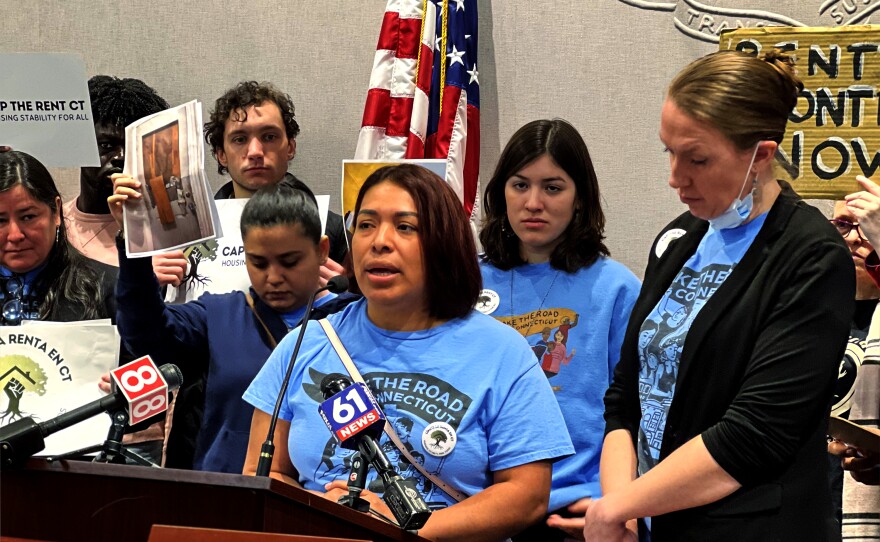
Hernandez then learned about Make the Road Connecticut, an organization that advocates for Latinos, undocumented immigrants and working families. The group aims to build new systems that ensure equitable access in sectors like education, healthcare, housing and the workplace.
Make the Road is celebrating 10 years of advocacy work for their communities. Hernandez said their decade-long commitment has helped her and others find their voice.
“When you come to this country, you bring with you a mentality that because you come from another country, you have no right to anything,” Hernandez said. “[Make the Road Connecticut] gives you the tools and teaches you that even if you don’t have an immigration status or legal documentation, it doesn’t take away your ability to raise your voice.”



From a rough start to a recommitment
Barbara Lopez experienced firsthand the disparities in education growing up in Los Angeles when her Guatemalan parents placed her in a wealthy neighborhood school with students who were mostly white.
“It was so wealthy that I was [one of] a handful of brown or international students, and because my last name is Lopez, people thought I was related to Jennifer Lopez,” she said. “Kids would always ask me what country I was from, because my accent was so thick. I felt othered in that school.”
When Lopez moved to Connecticut as an adult, she discovered similar inequities in the Bridgeport public school system. Lopez said she also noticed there wasn’t much organizing for the immigrant community as a unit in Bridgeport.
She was already working as a union organizer for family daycare and home care workers; it was just a matter of switching gears.
In 2015, Lopez helped set up Make the Road Connecticut as a co-founding organizer in Bridgeport, with the guidance and organizing model from the first Make the Road organization which was established in New York in the 1990s. Today, there are five Make the Road chapters in the country, including Nevada, New Jersey and Pennsylvania.
Lopez said it was difficult at first, because even though she spoke Spanish and looked Latina, there was a lot of distrust and misunderstandings around the purpose behind their organizing.
“I would go to bus stops, laundromats, churches or where moms were picking up their kids,” she said. “There was a lot of, ‘But what do you want from me?’ It took a lot of one-on-ones, house visits, meeting up in coffee shops, meeting up at libraries. It took a lot of connecting with already respected leaders in the community.”

The work has paid off, Lopez said. Their efforts have resulted in interpretation and other services for non-English speaking parents in schools, expanded Husky healthcare coverage for undocumented residents and strengthened protections for undocumented immigrants through new iterations of the Trust Act, among other victories in housing and workplace justice initiatives.
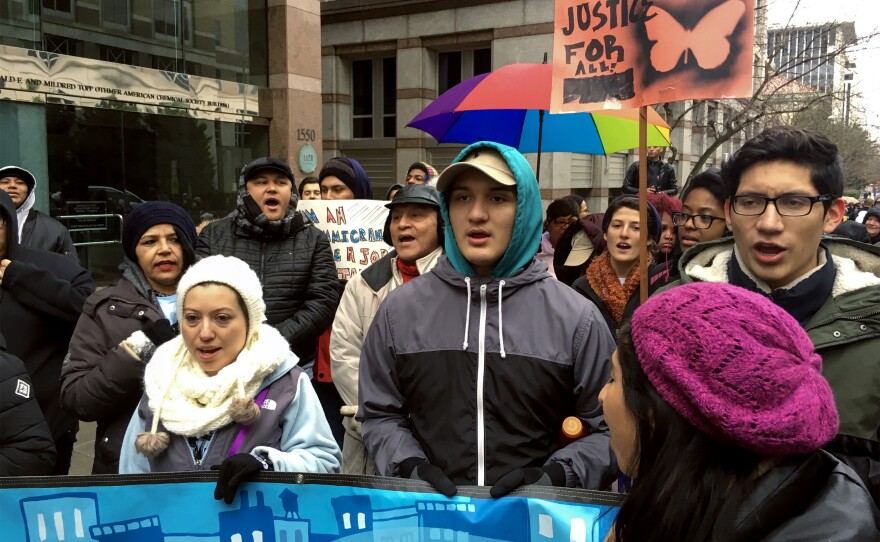
Lopez said the biggest victory, however, lies in the community. The organization has built a thriving network in Bridgeport and Hartford, she said. They help members become staff and some of their kids grow up eager to become members.
“In Bridgeport, our youth committee is from 13 to 21, so these little kids [who have been] coming with their parents, they have been around so long that they're like, ‘I'm 13 now. I can be part of a youth committee, right?’” Lopez said. “Seeing that brings me a lot of comfort and joy and hope.”
With that generational pipeline, the work continues. Lopez said this 10-year anniversary is not just a celebration; it’s a recommitment to the causes Make the Road Connecticut members care about.
A future of hope
Yuri Diaz Ortiz joined Make the Road Connecticut about five years ago, seeking the same solutions Sonia Hernandez was wanting in 2018: Spanish-language resources for Latino parents at her children’s schools.
“We couldn’t get any paperwork in Spanish. Everything was in English,” Diaz Ortiz said. “So we fought so those resources were available in different languages.”
That fight for justice wasn’t something that came naturally to Diaz Ortiz, though. Through training and experience, she said she became an outspoken advocate.

“It has changed me quite a lot because I started out as a very shy person, and now I'm a leading member at the state level here in Connecticut,” Diaz Ortiz said. “I think it has helped me a lot; I've really come out of my shell, and it's all been thanks to Make the Road.”
Over the next 10 years, Diaz Ortiz said she would like to see Make the Road Connecticut grow even more. She said she imagines the organization making even greater strides in education, healthcare or immigrant rights.
“As Hispanics, we look for a space where our voice is heard, where we can say, ‘Here I am and here I stay,’ and where we are listened to. If they don't listen to us, then we'll make them listen,” Diaz Ortiz said.
Ultimately though, Diaz Ortiz said she wants to hear more people in the community sharing how empowered they feel to speak out about issues they care about because of Make the Road Connecticut.
“I want to hear people say that Make the Road gave them a helping hand and they felt free, that they are a leader and they’re still a leader,” Diaz Ortiz said. “I want our kids to say, ‘My mom was a part of Make the Road. My aunt was part of Make the Road,’ [and for community members to respond], ‘Oh how nice! I’ve gone to Make the Road too.’”

Learn more
Visit the Make the Road Connecticut website to see a timeline of the past decade and to learn more about the organization.
They also have a presence on social media, including Instagram and Facebook.




