© 2026 Connecticut Public

FCC Public Inspection Files:
WEDH · WEDN · WEDW · WEDY
WEDW-FM · WNPR · WPKT · WRLI-FM
Public Files Contact · ATSC 3.0 FAQ
Play Live Radio
Next Up:
0:00
0:00
0:00 0:00
Available On Air Stations

U.S. Treasury Secretary Arrives in China

LYNN NEARY, host:

Treasury Secretary Henry Paulson is in China. It's his first visit there as a member of the Bush administration. He joined the cabinet in July.

U.S. business leaders and members of Congress want to see the Chinese currency appreciate in value as a way to reduce the U.S.-Chinese trade surplus. In remarks today, China's central bank governor acknowledged the challenges posed by China's trade surplus, but Chinese officials insist currency reforms will take place over time.

As NPR's Anthony Kuhn reports from Beijing, it's unlikely Paulson will be placing pressure on the Chinese to move more quickly.

ANTHONY KUHN: Speaking yesterday in Singapore, where he attended a G7 meeting, Paulson said he didn't see any quick fixes on the issue of China's currency, the Yuan. He said he was in no position to dictate China's exchange rate, and he admitted that America's lack of domestic savings was partly to blame for global trade imbalances.

China's central bank governor has made it clear that Beijing is not offering any concessions on its exchange rates anyway.

Paulson said that he would work towards the longer-term goals of encouraging China's economic reforms, and strengthening the overall U.S.-China relationship. He added that getting China to free up its currency would take time, patience, and high-level contacts.

Paulson has plenty of those. He traveled to China more than 70 times in his former job as chairman of investment bank Goldman Sachs. He's scheduled to have lunch this week with Chinese President Hu Jintao, in Beijing. Before that, he'll stop off in east China's Jiangsu Province, home to China's most competitive private companies.

Anthony Kuhn, NPR News, Beijing. Transcript provided by NPR, Copyright NPR.
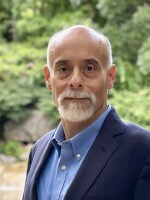
Anthony Kuhn is NPR's correspondent based in Seoul, South Korea.

Federal funding is gone.

Congress has eliminated all funding for public media.

That means $2.1 million per year that Connecticut Public relied on to deliver you news, information, and entertainment programs you enjoyed is gone.

The future of public media is in your hands.

All donations are appreciated, but we ask in this moment you consider starting a monthly gift as a Sustainer to help replace what’s been lost.

SOMOS CONNECTICUT is an initiative from Connecticut Public, the state’s local NPR and PBS station, to elevate Latino stories and expand programming that uplifts and informs our Latino communities. Visit CTPublic.org/latino for more stories and resources. For updates, sign up for the SOMOS CONNECTICUT newsletter at ctpublic.org/newsletters.

SOMOS CONNECTICUT es una iniciativa de Connecticut Public, la emisora local de NPR y PBS del estado, que busca elevar nuestras historias latinas y expandir programación que alza y informa nuestras comunidades latinas locales. Visita CTPublic.org/latino para más reportajes y recursos. Para noticias, suscríbase a nuestro boletín informativo en ctpublic.org/newsletters.

Federal funding is gone.

Congress has eliminated all funding for public media.

That means $2.1 million per year that Connecticut Public relied on to deliver you news, information, and entertainment programs you enjoyed is gone.

The future of public media is in your hands.

All donations are appreciated, but we ask in this moment you consider starting a monthly gift as a Sustainer to help replace what’s been lost.

Related Content
