This past school year, five New Hampshire school districts were offered three years of online behavioral health counseling for their students, paid for by local nonprofit Safe Schools New Hampshire. The catch? Their students had to help roll the program out to their peers.
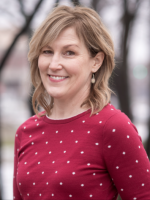
It’s not surprising that 17-year-old Kylee Plummer was put in charge of promoting Cartwheel Care’s counseling in Claremont. She answers emails immediately, juggled multiple jobs in high school, and was named this year’s model youth by the Claremont Chamber of Commerce.
Plummer also knows depression: Hers kept her home for half of middle school.
She said this was the first time an adult had put her in charge of something so significant. She remembers the day she pitched Cartwheel Care’s online counseling to her classmates this spring — and their unexpected reaction.
“The principal came up to us and he was like, ‘I have never, never in my years of teaching, heard a room so quiet when students were talking,’” Plummer said. “It was incredible.”
Cartwheel connects students with a licensed counselor online within days, and bills their family’s insurance. Safe Schools New Hampshire used donations and grants to cover the rest, about $110,000 this year across the five districts, and plans to do so for another two years.
School districts in Claremont, Newport, Lebanon, Kearsarge, and Hopkinton are beginning the pilot’s second year as they welcome students back to school. This past year nearly 110 students attended 870 counseling sessions.
Some students met with counselors for a session or two, some for months. A few students continued counseling through the summer.

Anne Pearce and Fin Murphy, who graduated in June, led the Cartwheel roll out to their middle and high school classmates in Hopkinton. They visited all the English classes, telling students how the online counseling works — and normalizing asking for help.
“You can just be someone who gets stressed randomly about a test, or maybe is having a fight with their boyfriend, or is having a dispute with their friends,” Pearce said. “And it was just nice that Fin and I understand those things. You know, we're high schoolers.”
Pearce and Murphy have personal experience. Pearce is comfortable talking about her own mental health struggles. Murphy recently lost a cousin to suicide.
“He had a lot going for him,” Murphy said. “And it's just really sad to see someone with such great potential deal with something and not be able to get through it and wasn't able to reach out for the help that they needed.”
Plummer, Murphy, and Pearce said having a peer explain the benefits of therapy makes sense.
“You can put up as many posters as you want, as many social media posts as you want,” Plummer said. She said spreading it by word of mouth is a much bigger way to build trust in the program.
‘A solid option’
Suicide is the second leading cause of death for youth and children in New Hampshire, according to the Department of Health and Human Services. In the most recent survey of New Hampshire high school students, almost 35% reported feeling sad or hopeless almost every day for two weeks or more. Almost 16% of students said they needed counseling but could not get it.
And those who do can wait three to six months to get an appointment, according to Safe Schools New Hampshire.
School counselors can’t fill the gap. Most are not trained or licensed to provide students individual, ongoing counseling. And there’s no time even if they were. A high school counselor in New Hampshire can carry a caseload of up to 300 students who need academic accommodations, career and college counseling, and help navigating social hurdles.
Counselors say one of the biggest benefits of the Cartwheel pilot is cutting that wait to a week.
“I think the time to get into therapy is just shrunk tremendously,” said Beth Parthum, a high school counselor in Lebanon. “It's just so fast.” Cartwheel does this by using counselors from all over the country who are licensed in New Hampshire.
Danielle Meserve, a high school counselor in Hopkinton, refers students to local counselors knowing they’ll likely have to wait because there is so much demand for their services.
“And then you feel like, ‘Oh, geez, now it's a week out from the issue and they're still not seeing anybody,’” she said. That’s why she was excited about Cartwheel. Meserve added: “It was just a no-brainer to do it.”

Kristine Turcotte has been a school counselor for 23 years and has spent the last four at Kearsarge Regional High School in North Sutton.
“It has been really nice to have a solid option to give parents that is more than just a phone number,” she said.
‘Their experiences, their needs’
Turcotte is seeing Cartwheel empower students to help each other.
“So many times kids will be sitting on, ‘Oh, my friend has made really concerning statements for days before they tell an adult to get the help they need,” Turcotte said. “And I think the more we can talk about it with youth voice, the more acceptable it is for somebody to be like, ‘This person needs support. And here's what we have to do.’”
Safe Schools New Hampshire divided the counseling spots it paid for among the five school districts depending on their size and need.
For example, the Claremont School District got 40 spots and used 39, mostly for elementary and middle schoolers. Courtney Porter, the district’s director of student wellness, said it was essential to work with students like Plummer to roll it out.
“When you can actually take the voice of the students around what they need and you can build supports utilizing their language, their experiences, and their needs,” Porter said, “you're only going to increase their ability to fill their toolbox full of resources.”
Shrinking school budgets
Porter said she would not have pitched the program had it not been free, because Claremont School District had a $5 million deficit last school year.
When the pilot ends in two years, Mark Phillips, the executive director of Safe Schools New Hampshire, hopes the school districts see enough positive academic impacts to continue the counseling at their own expense.
“In a world of shrinking New Hampshire school district budgets,” Phillips said, “there's a compelling economic argument to view this specific online therapy program as being as important and consequential as having a chemistry teacher.”

Phillips and Joe English, Cartwheel’s CEO, said it’s too soon to know what impacts the program has had in New Hampshire. They are hoping to see the same success Cartwheel has seen elsewhere in the country.
In one of the Massachusetts school districts using Cartwheel’s online counseling, chronic absenteeism dropped by 34% and suspensions fell by 61%, English said. Students reported significant improvements in their mental health.
He said New Hampshire’s decision to have students promote the program is unique.
“In some ways, it's becoming a good blueprint for us to bring to other states because [students] might see needs or feel needs that are otherwise hard to catch from a parent angle or a school angle,” English said.
Most of the pilot school districts said they don’t know yet what it will cost them to continue Cartwheel after the pilot ends.
“I think that was the biggest concern,” Meserve in Hopkinton said. “Are we going to start this program for kids, get everybody excited, get it going, and then just be like, ‘Oh yeah, we don't have that anymore.”
The Lebanon School District has estimated its cost to keep Cartwheel: up to $60,000 a year. Superintendent Amy Allen said the program’s future in her district will depend on its impacts, such as improved attendance or fewer referrals to the nurse’s office for anxiety.
“For me it fits into our strategic plan for student wellness,” Allen said.
Plummer, Murphy, and Pearce are off to college grateful a new crew of students will take their place. Plummer is considering nursing. Pearce is studying civil engineering. Murphy wants a career in human rights and international relations.
He said there are a lot of problems facing the world he’d like to help solve.