A highly unusual period of drought has developed in Massachusetts over the past decade.
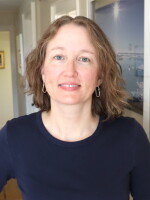
Although heavy rainfall is happening more often, streams and groundwater wells have less water, Vandana Rao, the state’s director of water policy, told a gathering of Cape Cod leaders Monday at the OneCape Summit in Harwich.
“In Massachusetts, make no mistake, climate change is water change,” she said.
The state is experiencing one of its most significant droughts since the record-setting, one-in-500-year drought of the 1960s, she said. In nine of the past 11 years, Massachusetts has experienced a drought for at least four months each year.
During a sustained period of drought in 2016, the state saw record-low stream flow, even though the rainfall deficit was not as severe as in the 1960s.
“Our data on both stream flow and groundwater have been a little baffling for us,” Rao said. “We should not have expected to see record lows.”
Climate change is one factor. Another is the way humans use the land — especially by creating impervious surfaces, such as paved roads and driveways.
“The droughts today are behaving different,” she said. “And all of it points to land use. The way we have developed in the last 60 to 80 years, where we have developed, and how we have developed have all led to the fact that our hydrological cycle is changing.”

She said impervious surfaces can lead to drought by blocking the recharge of groundwater. At the same time, they can also cause floods, because rain that hits those surfaces flows rapidly away from where it would normally enter the ground.
Rao, who works in the Massachusetts Executive Office of Energy and Environmental Affairs, was one of the featured speakers at the Cape Cod Commission’s annual policy summit.
Drought, she said, cannot be separated from the future of the Cape Cod economy, housing, and protecting natural resources — the major themes of the summit.
“So as we think about not just water resources, but about development, about housing, about how we are using water, you know, how much wastewater is being generated?” she said. “Where is it going to go? All those decisions are intertwined with the way we are experiencing drought these days.”
Massachusetts Attorney General Andrea Joy Campbell spoke at the summit in an onstage conversation with Kristy Senatori, executive director of the Cape Cod Commission.
Campbell said telling the story of what makes each town unique is one way to help sustain a vibrant, year-round community on the Cape.
“Even though it’s technically off-season, many of the restaurants are still open,” she said. “They're small businesses of folks who love the region and not only love it, but as you go into a particular municipality, know that municipality and what sets it apart, how Chatham is different from Brewster, how Brewster is different than Wellfleet. … I think there's an opportunity to tell more of these stories, to draw more people in.”
She said setting divisive politics aside will make it easier to work toward the region’s common goals.
Senatori opened the summit at the Wequassett Resort by urging the assembled leaders to work together to solve the region's most pressing problems.
“We face a housing crisis that threatens our workforce, our communities, and the ability of the next generation to build a life here,” she said. “We're confronting the impacts of climate change and rising seas, and we're working to protect water quality and ensure the long-term availability of clean, safe drinking water.”
She said Cape Cod’s 15 towns rightly value local control, but they cannot work alone.