
"We think Newtown received about ten times the amount that Virginia Tech received."
Ashley Maynor
Flags are at half-staff in Connecticut on Monday on the anniversary of the mass shootings at Sandy Hook Elementary School in Newtown in 2012.
Five years earlier, 32 people were massacred on the campus of Virginia Tech Polytechnic institute, the deadliest shooting by a single gunman in U.S. history. Since then, there have been a string of deadly attacks nationwide, including most recently in San Bernardino, California.
A professor at Virginia Tech at the time has studied the outpouring of grief -- letters, cards and gifts -- that flooded into that community and others following mass shootings. She’s just launched a project that aims to redirect the flow of sympathy messages toward those in a position to do something about gun violence.
Ashley Maynor, a digital librarian and filmmaker, was teaching at Virginia Tech in 2007. "I knew a number of people who were killed," she said. "And going through that experience of a media invasion following a tragedy, and then also an outpouring of condolence materials, I was very curious about all the stuff people sent -- what people sent, what they hoped to accomplish, and ultimately what happened to all of the mail that we got."
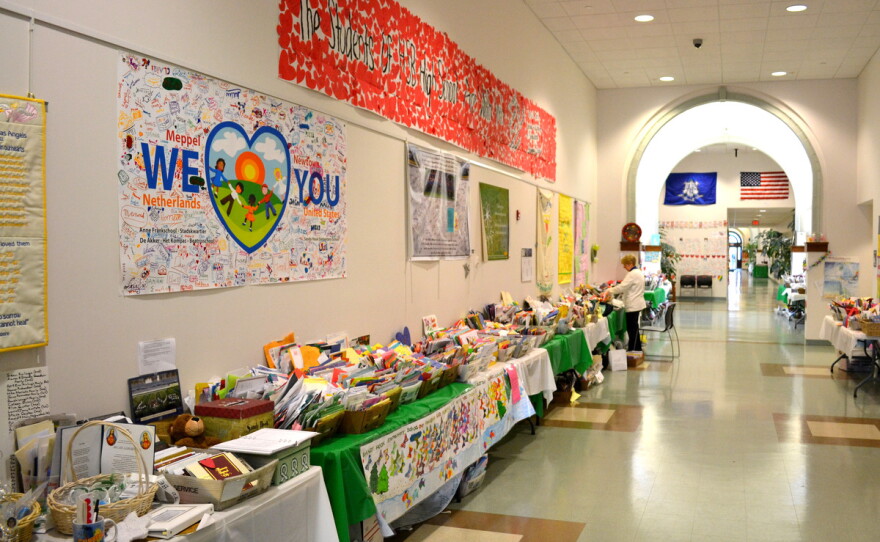
Roughly 90,000 lots of material arrived at Virginia Tech after the mass shooting: quilts, artwork, books, banners, posters, CDs, videos, and even hand-painted eggs. The school created an online exhibition and archive with about ten percent of what was received.
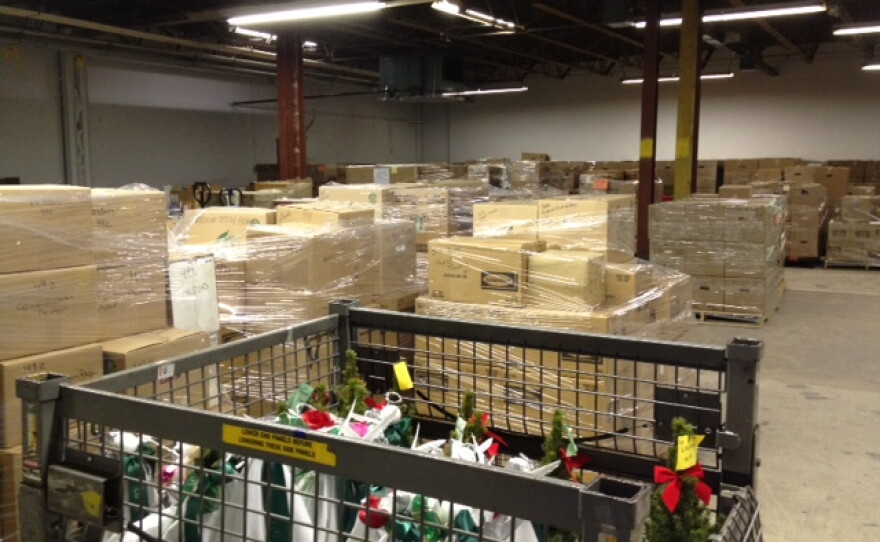
And though that may seem like a lot of stuff, Maynor said, "It doesn’t compare at all to what was received by Newtown. We think Newtown received about ten times the amount that Virginia Tech received. Over 65,000 teddy bears, over half a million pieces of mail, and in one particular instance, nine semi-trucks of paper snowflakes."
The objects crowded the hallways of municipal buildings and the local library, and eventually spilled over into warehouses in Newtown. Much of the material was also eventually archived.
Maynor released a feature-length web documentary, called "The Story of the Stuff," exploring the thousands of items sent to Newtown. She presented it this past summer at the Film Society at Lincoln Center, among other venues.
Maynor said that these days, people learn about tragedies almost as they’re happening, and want to do something. The desire to send stuff is positive, but: "These communities where tragedies has happened are being flooded with material that they don’t necessarily need and they can’t necessarily use," Maynor said. "So I wondered if we could redirect that energy into something that might help prevent the violence from happening in the first place."
Maynor launched a web-based mobile app called Cranes for Change that helps people create hand-made mass mailings to send to legislators. Watch the video and see the infographic below to learn how it works:

Maynor urges users to include personal messages about the impact of gun violence on their lives. She said she hopes the project will offer a pathway for people to respond after a tragedy to the human impulse to want to do something, but in a way that might help effect real change.
Heather Brandon contributed to this report.




